
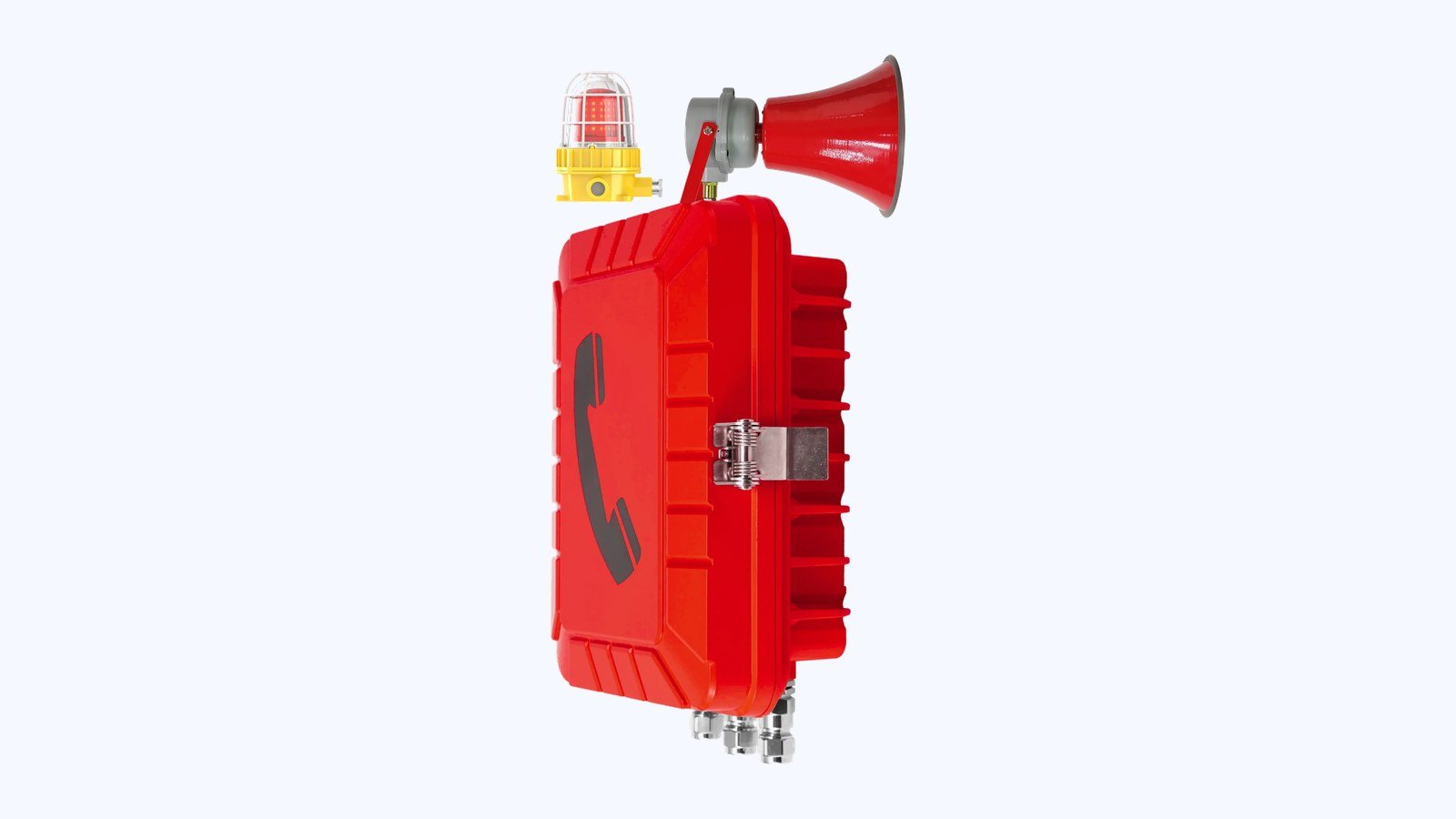
Explosion-proof telephones are used in flammable and explosive places such as power plants and chemical plants. They are fitted with couplers and are sometimes called coupler explosion-proof telephones. They are terminal equipment of an explosion-proof communication system and keep the basic functions of an ordinary telephone.
A typical unit can connect directly to a 24–60 V local telephone network, an automatic exchange or a small user exchange, or a dispatch console.
Built around a cast aluminum enclosure
The explosion-proof shell is cast in aluminum alloy and electrostatically coated, giving it impact resistance and protection performance. The keypad is stainless steel, the handset is an outdoor public-telephone handset, and the handset cord uses a metal-sheathed outdoor cable.
Circuit components are selected and produced to outdoor standards, and the circuit is designed with explosion protection in mind. An anti-noise handset can be specified to keep calls clearer in high-noise environments.
Installation and wiring
The telephone is wall-mounted and fastened with screws. It connects to the user line of the telephone exchange with a two-core cable with an outer diameter below 8 mm. The core cross-section is at least 0.5 mm², and the cable entry is sealed with a 1/2G sealing nut.
Matching the phone to the area
The enclosure is only one part of the selection. The area classification, gas or dust group, temperature class and required Ex protection type all have to match the phone’s certification. Installation details such as cable glands and sealing are part of the same safety chain.
See the industrial explosion-proof telephone