
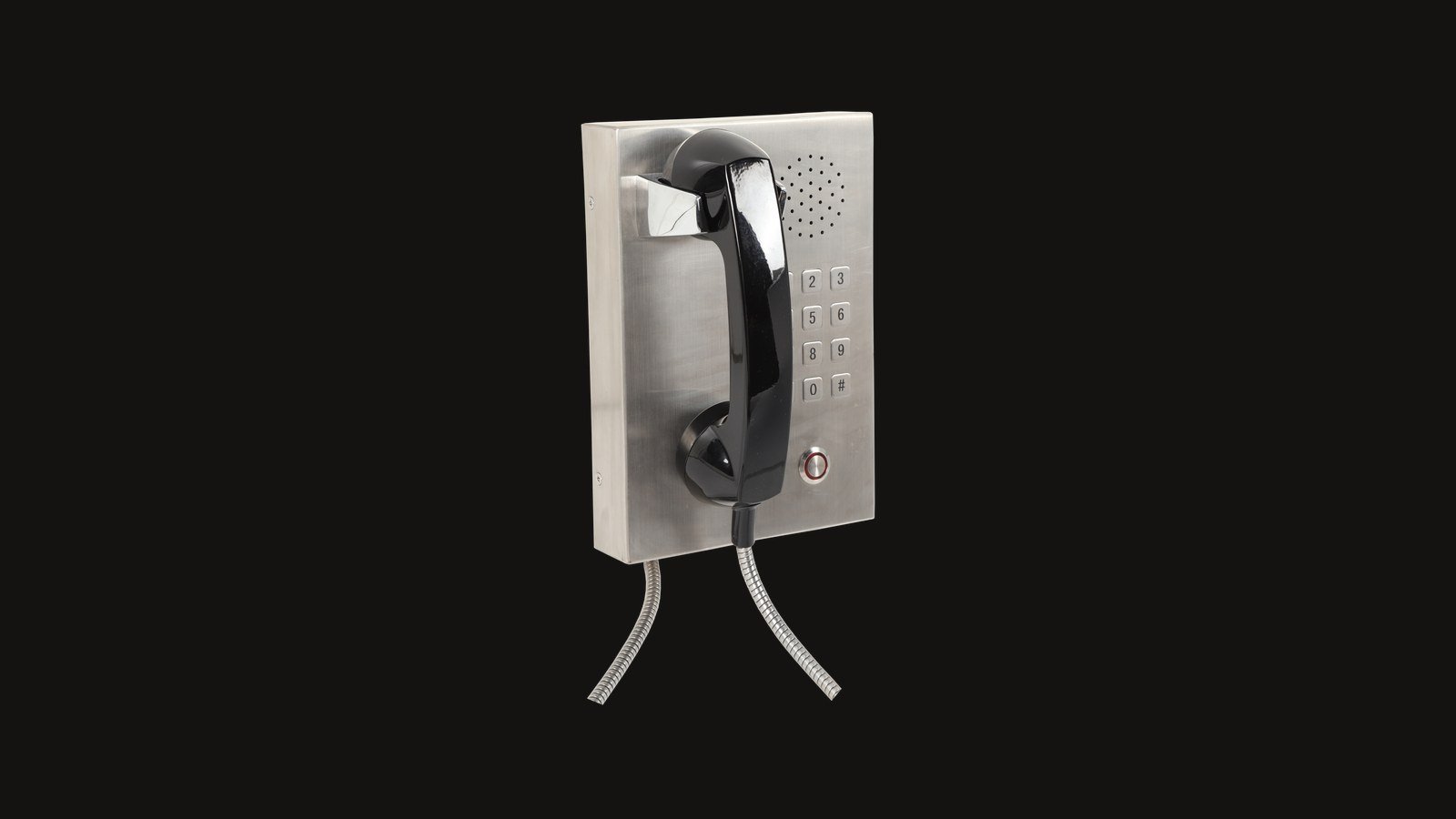
Industrial telephones are commonly rated between IP65 and IP67. The right choice depends on how much water the phone will actually meet, not on which number looks strongest on the datasheet.
What changes between IP65, IP66 and IP67
- IP65: Protects against low-pressure water jets, such as those from a regular water pipe. Suitable for indoor or outdoor locations with normal rainfall.
- IP66: Provides IP65 protection and withstands high-pressure water jets. Suitable for extreme rainfall, coastal exposure or industrial wash-down.
- IP67: Provides IP66 protection and withstands temporary submersion, typically one meter for 30 minutes. Suitable for coastal areas, flood-prone sites or locations with a risk of immersion.
The jump from IP65 to IP66 is about the force of the water. The jump from IP66 to IP67 is about whether the enclosure can survive being underwater for a short period.
Matching the rating to the site
A phone under a shelter or in a covered loading bay may only need IP65. An exposed dock, a vehicle wash area or a site cleaned with pressure hoses is a better fit for IP66. A tunnel low point, a riverbank or a coastal installation where standing water is possible should be specified at IP67.
It also helps to look at the mounting position. Water running down a wall, spray from a jet and immersion are different risks, and the same product can perform differently depending on how and where it is installed.
If the application is genuinely uncertain, describe the site conditions to the manufacturer rather than defaulting to the highest rating. The right enclosure, cable entry and mounting method matter as much as the two digits.