
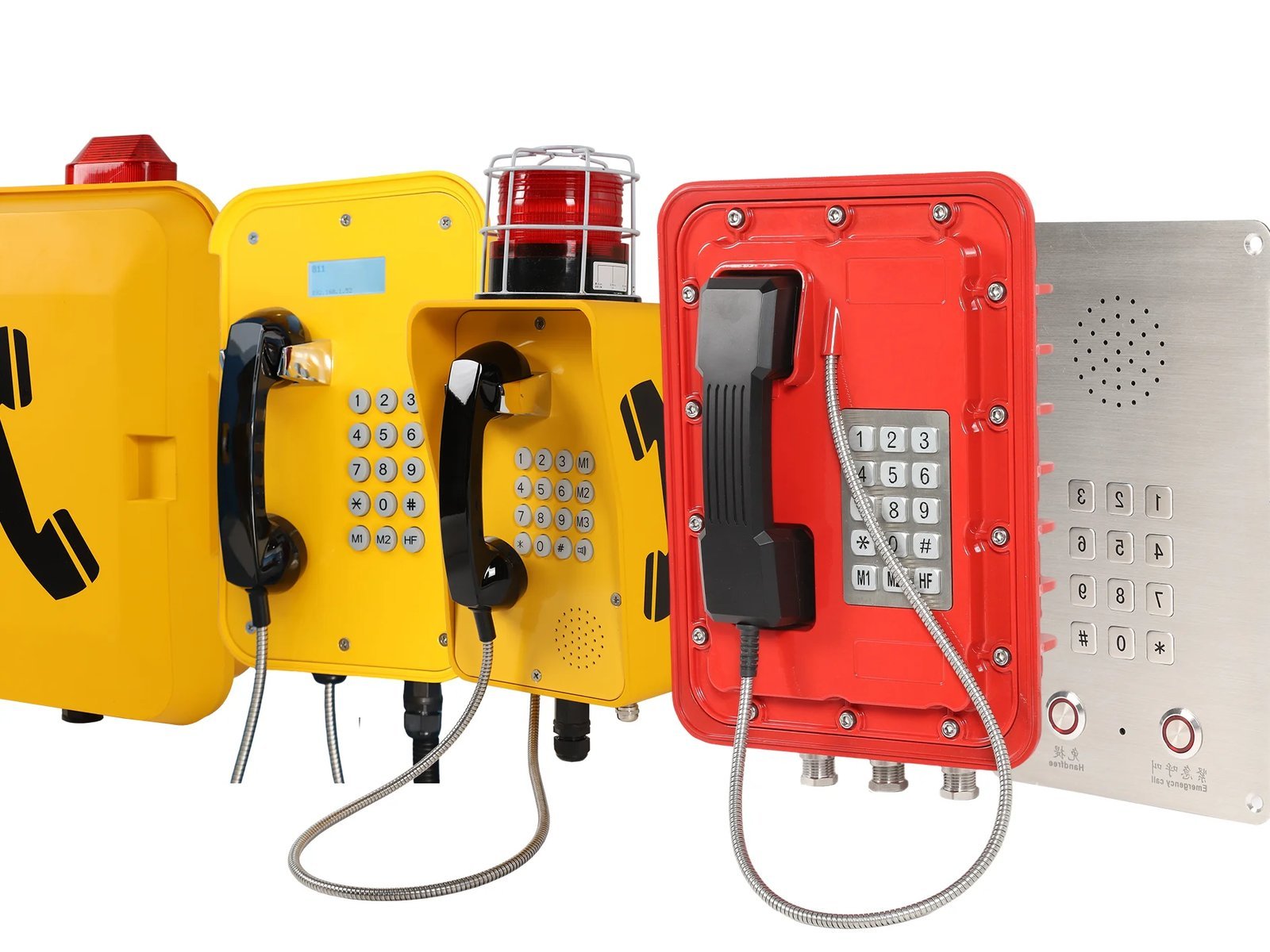
Industrial telephones have to withstand high temperature, high humidity, strong corrosion, flammable atmospheres and deliberate abuse. The casing material is not cosmetic: it is the first line of defense for the electronics inside and for the people using the phone.
Safecom, a specialist in industrial communication equipment, takes an in-depth look at the four main enclosure materials and where each one earns its place.
Industrial telephone material analysis
Stainless steel: the resilient all-rounder
Stainless steel, commonly SUS304 or SUS316, is a high-end choice for industrial telephones. It is known for high hardness and excellent oxidation resistance.
Core characteristics: Very strong corrosion resistance, resistance to mechanical impact including vandalism, and easy cleaning.
Technical details: SUS316 adds molybdenum, which makes it more resistant than 304 to chloride corrosion such as sea salt.
Where it works:
- Food processing plants: Withstands wash-down and meets hygiene standards.
- Coastal ports and drilling platforms: Resists salt-spray corrosion.
- Prisons and underground passages: Vandal-resistant and secure.
Explore stainless steel intercom phones
Aluminum alloy: lightweight explosion-proof pioneer
Aluminum alloy casings are usually pressure-cast and then electrostatically powder-coated. It is the most common material for explosion-proof telephones.
Core characteristics: Excellent heat dissipation, light weight with high strength, and a non-sparking surface.
Technical details: Aluminum alloy is less likely to generate mechanical sparks on impact, which matters in flammable gas environments.
Where it works:
- Petrochemical plants and gas stations: Areas that require Ex d explosion-proof certification.
- Underground mines: Reduces the weight of mobile installations while surviving heavy impacts.
See the explosion-proof aluminum telephone
Cold-rolled steel: the cost-effective choice
Cold-rolled steel is the most widely used economical material, usually combined with a thick outdoor powder coating.
Core characteristics: Sturdy structure, good processing performance and strong cost control.
Technical details: Corrosion resistance depends heavily on the coating. If the coating is damaged, the risk of rust has to be managed.
Where it works:
- Urban rail transit and tunnels: Suited to large installations where cost-effectiveness matters.
- Power cable trays and indoor industrial rooms: Standard deployment in sheltered environments.
Explore weatherproof steel telephones
GRP: the insulation specialist
GRP is glass-reinforced plastic, made from unsaturated resin and glass fiber.
Core characteristics: Excellent insulation, resistance to chemical acids and alkalis, no rust and very low weight.
Technical details: In strong electromagnetic interference or high-voltage areas, non-metallic materials have natural advantages for signal penetration and electrical safety.
Where it works:
- Chemical plants and pickling workshops: Highly corrosive acid and alkali environments where metal casings struggle.
- High-voltage power rooms: Avoids electric-shock risk from induced current.
The right material follows the environment. A coastal site, a solvent plant and an underground corridor can all need a telephone, but not the same enclosure.