
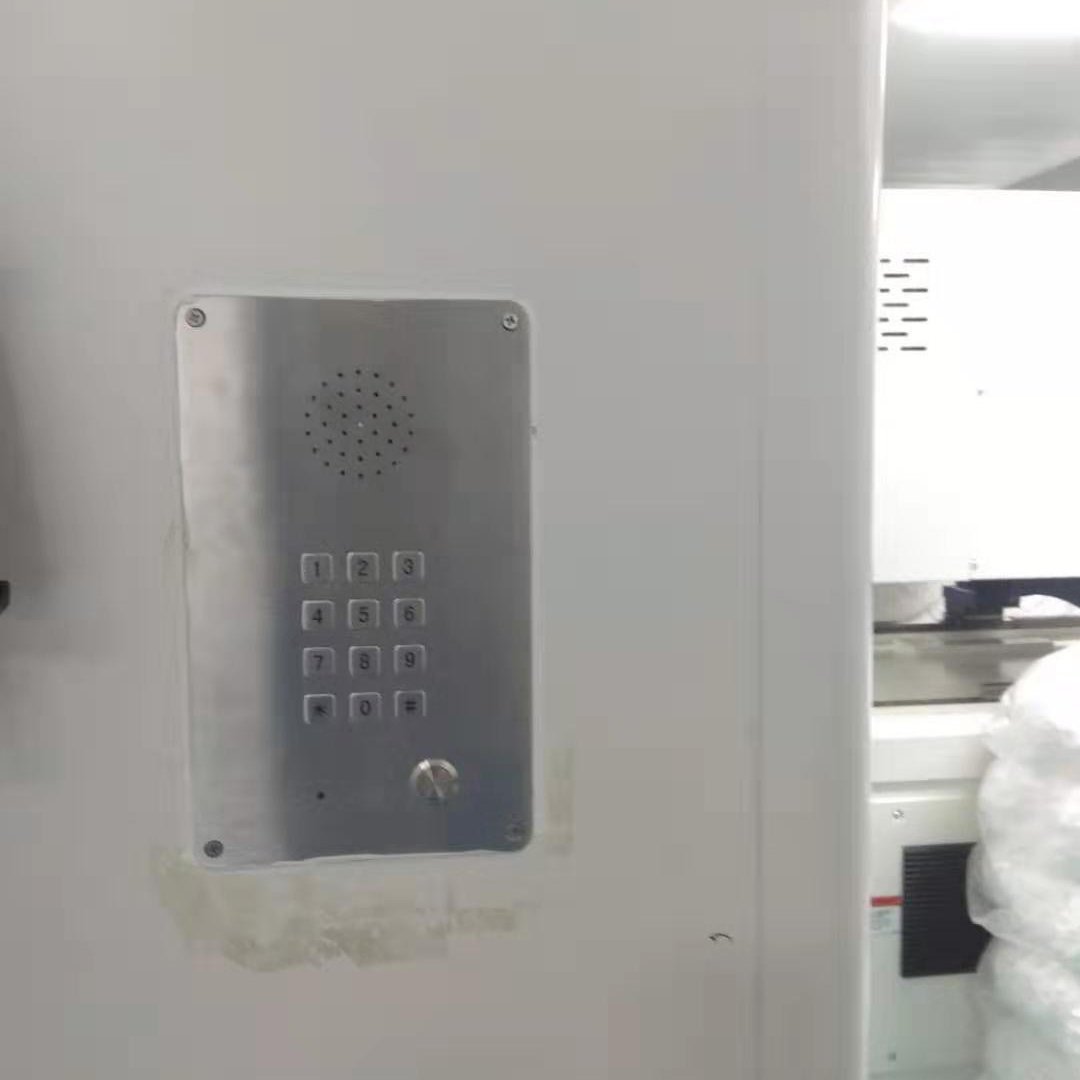
In high-stakes environments like biopharmaceuticals, semiconductor fabrication, and clinical laboratories, “Cleanliness” is the ultimate benchmark. While physical isolation (PPE, airlocks, and sealed partitions) is essential for contamination control, it often creates a “communication gap.”
Standard communication devices are often “pollution sources” themselves—trapping particulates in crevices or failing under harsh sterilization. A dedicated Cleanroom Intercom System is not just a tool; it is the vital communication backbone that maintains operational integrity without compromising ISO standards.
Purpose-built design: beyond standard intercoms
Unlike conventional phones, professional cleanroom stations are engineered to meet stringent regulatory requirements (GMP/FDA). Key features include:
- Flush-mount geometry: Units sit level with the wall, so there is no ledge for dust to collect and airflow stays laminar.
- Non-porous materials: 316L stainless steel or toughened glass resists aggressive cleaning agents such as vaporized hydrogen peroxide, alcohol and sporicides.
- Touch-free interaction: Infrared sensors or high-sensitivity capacitive touch let operators trigger a call with a wave, even through several layers of gloves.
Advanced audio engineering: clarity amid noise
Advanced Audio Engineering: Clarity Amidst Noise
- Active noise cancellation: Algorithms filter constant low-frequency background noise and isolate the human voice.
- Acoustic echo cancellation: Prevents the feedback loop common in sterile, hard-surfaced rooms.
- High sound pressure levels: Audio stays audible to personnel wearing full-body hoods or powered air-purifying respirators.
Smart integration: SIP and Industry 4.0
Modern cleanroom intercoms have evolved from simple point-to-point links into VoIP/SIP-based smart terminals. This digital shift allows for:
- Unified communications: Direct dialing from the cleanroom to office extensions, mobile devices or remote experts.
- Security linkage: Integration with access control and CCTV enables remote door release and visual verification.
- Emergency broadcasting: In a chemical leak or fire, the system can switch into a high-priority PA channel to guide evacuation.
Critical applications
Cleanroom intercoms are used in biopharmaceutical production, semiconductor fabrication, clinical laboratories, pharmacies and hospital sterile suites, where a sealed environment still needs a clear path to the outside.
A cleanroom intercom is more than hardware. It is a commitment to safety and efficiency: the environment stays sealed, while information keeps moving.
See the stainless clean IP intercom